Start with shade
Direct sunlight is one of the easiest heat sources to control. Close curtains or blinds before the room heats up, especially on windows that face strong afternoon sun. Blackout curtains, reflective liners, or even a temporary shade panel can reduce the amount of radiant heat entering the room.
Move air with intention
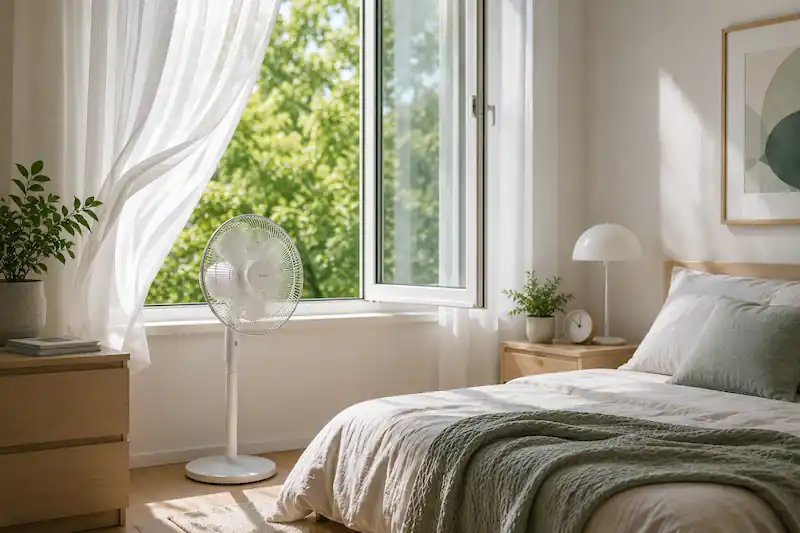
A fan works best when it has a job. In the cooler part of the day, point one fan toward an open window to push warm indoor air out, and open another window on the shaded side if you can. When outdoor air is hotter than indoor air, close the windows and use a fan to move air across your body instead.
Use cool surfaces and water wisely
A damp cloth around the neck, a cool foot bath, or a fan blowing across a bowl of ice can provide short-term relief. These tricks work on your personal comfort more than the full room temperature, which is often exactly what you need at a desk or bedside.
Reduce indoor heat sources
Cooking, incandescent bulbs, gaming PCs, dryers, and chargers can all add heat. Shift cooking to cooler times, choose no-cook meals when practical, and unplug equipment you are not using. Small changes are more noticeable in compact rooms.
Try personal evaporative cooling in dry air
Evaporative coolers pass air over water or ice to create a cooler-feeling breeze. They tend to work best in dry environments and for close-range comfort. They are not a substitute for central cooling, but they can be useful beside a bed, desk, or sofa.
Keep yourself hydrated
Room comfort is not only about air temperature. Drink water regularly, wear breathable clothing, and take breaks from direct heat. If a room becomes dangerously hot, prioritize safety and move to a cooler location.
If you're considering a portable evaporative cooler, see our current top pick: TundraFreeze Portable Air Cooler.