How evaporative cooling works
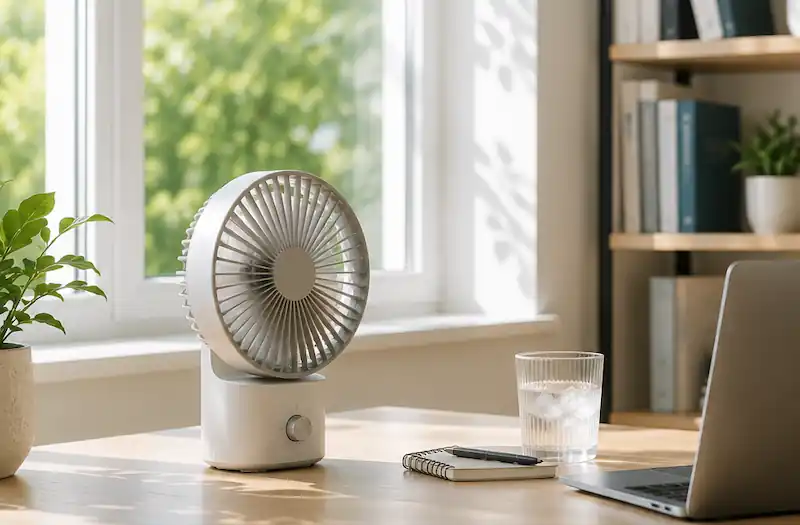
An evaporative cooler moves air across water or ice. As moisture evaporates, the airflow can feel cooler and less dry. This process is simple, lightweight, and well suited to personal comfort zones such as a desk, nightstand, or small seating area.
How air conditioning works
An air conditioner uses a compressor and refrigerant loop to remove heat from indoor air and move it elsewhere. That is why many AC units need a window, outdoor unit, drain, or vent hose. They are built to lower the temperature of a room more directly, especially in humid conditions.
Where evaporative coolers shine
Evaporative coolers are useful when you want a cooler-feeling breeze close to your body, prefer a compact device, or cannot install a vented unit. They can also add a little moisture to dry indoor air. In a dry climate or a small personal zone, that can be enough to make working, reading, or sleeping more comfortable.
Where a real AC wins
If you need to cool an entire room, control humidity, or maintain a precise indoor temperature, an air conditioner is the stronger tool. Evaporative cooling becomes less effective as humidity rises because the air cannot absorb as much additional moisture.
Think about the room, not just the device
The same cooler can feel very different depending on where it is used. A shaded home office with dry air and a nearby outlet is a good match for personal evaporative cooling. A sunny living room with several people, open doors, and high humidity usually needs a stronger room-level system.
Which one should you choose?
Choose based on the job. For whole-room temperature control, an AC is usually the honest answer. For portable personal relief with simple setup, an evaporative cooler can make sense. The key is not expecting one category to do the other category's work.
If you're considering a portable evaporative cooler, see our current top pick: TundraFreeze Portable Air Cooler.